


Disagreements over residential school history should be settled through debate, not criminal prosecution.
Manitoba Premier Wab Kinew has said what few politicians dare to say: people with divergent views about residential schools should not be prosecuted for it.
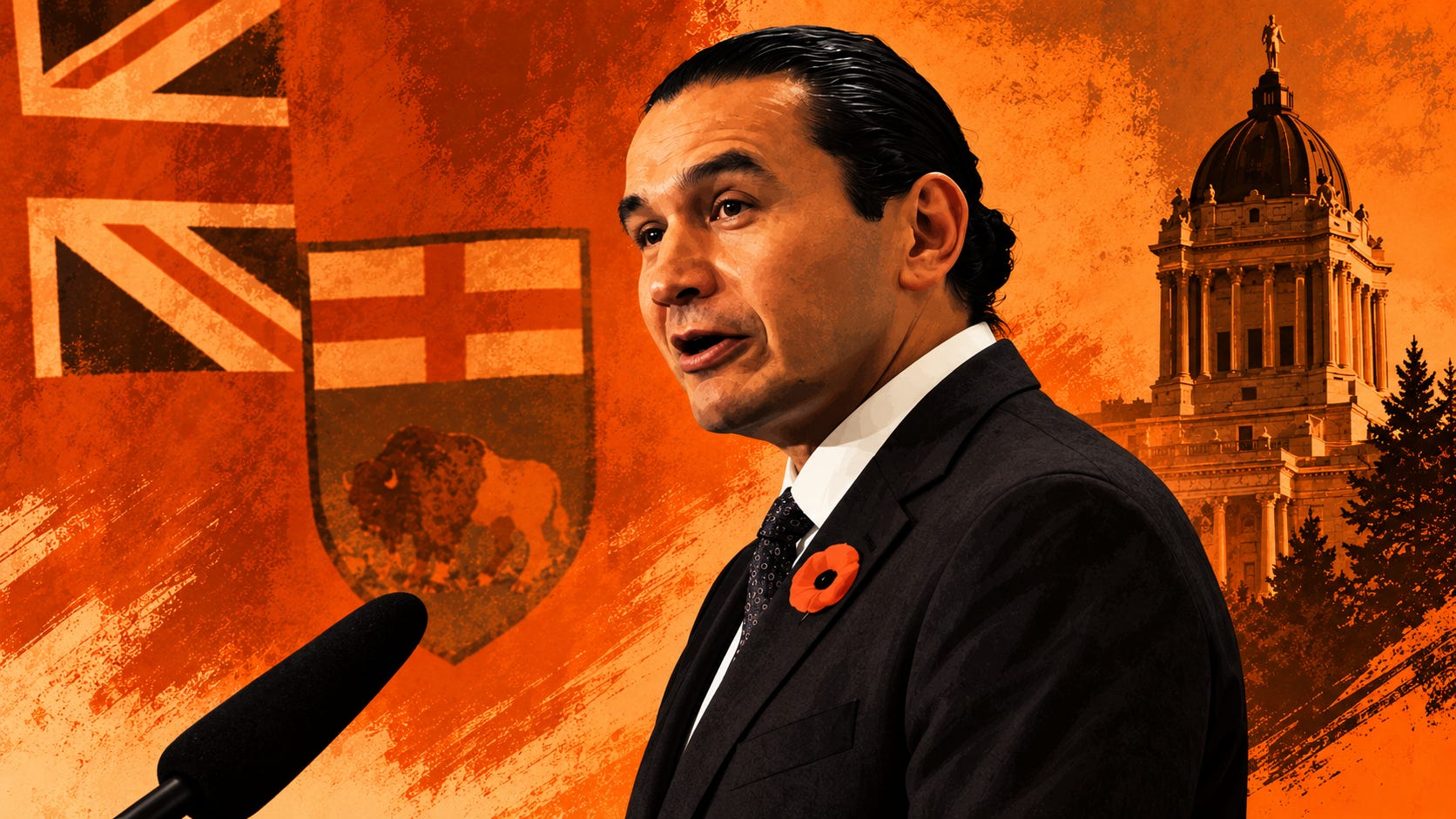
He should know. He has been partly wrong about them. In July 2021, Alan Lagimodiere, Manitoba’s minister of Indigenous reconciliation and northern relations, repeating Ottawa’s official line when it built the system, said the schools were originally meant to give children “the skills and the abilities they would need to fit into society.” Kinew, then opposition leader, interrupted the minister’s press conference to call it a defence of the schools.
Despite being right, Lagimodiere apologized the next day. It was the political thing to do. His apology changed nothing in the historical record. Public opinion has never been a source of historical truth, and politicians chasing votes aren’t authorities on history. No one called the police on either man.
Asked about Leah Gazan’s bill to criminalize residential school “denialism,” Kinew said: “I have a lot of respect for MP Gazan, but I don’t think we can criminalize this. I think we have to just do the continued work of educating people and trying to combat misinformation.”
In reaction, the Assembly of Manitoba Chiefs declared itself “extremely disappointed.” Hilda Anderson-Pyrz, president of the National Family and Survivors Circle, said the premier’s statement “creates further harm.” Kinew’s office replied that his comments stand.
Kinew is right, and Canadians owe him thanks for the courage to face backlash from allies.
Gazan’s Bill C-254 would create an offence of wilfully promoting hatred against Indigenous peoples “by condoning, denying, downplaying or justifying” the residential school system. Under such a slippery concept, even Lagimodiere’s accurate remark could have drawn a police complaint. Gazan wants it in the Criminal Code beside Holocaust denial.
Kinew’s refusal pushes that outlandish comparison off the table. The hyperbolic analogy gives the bill away: it asks the law to enforce feelings, however popular.
The Crown has no place in this argument. The National Centre for Truth and Reconciliation has documented more than 4,000 children who died while attending the schools, most from disease. Not one of those deaths has been proven a homicide. Even the Truth and Reconciliation Commission’s finding of “cultural genocide” remains debatable. A law criminalizing contested interpretation would let the Crown settle history that could never be publicly contested.
Kinew supplied the test case himself. On Orange Shirt Day, at the cemetery of the former Brandon residential school, he held up newspaper clippings to answer those who say, “Show me the graves.” They recorded deaths from illness, a death by lightning, an obituary with no stated cause and a sick boy sent home. Each was a family’s loss. None described a crime. Under a law against “downplaying,” a columnist who said so could expect a criminal complaint.
Gazan’s own words show whom the bill would reach. “Some people don’t want to be educated,” she declared. She wants penalties for “people that are using positions of power” to spread disinformation: columnists, historians and politicians, the people a free country needs arguing in public. Tabling the bill, she listed “denying genocide” among the sins of denialism. Anyone who doubts that label should fear prosecution.
Anderson-Pyrz says the premier’s restraint causes harm. Gazan calls denialism “another form of violence.” Here lies the gravest danger of such laws. If declining to criminalize causes harm, and the bill punishes such harm, how long before restraint itself is called denialism?
The larger principle cuts both ways. Gazan, too, may be wrong in public without fear of prosecution. Kinew, whose views on the schools sometimes reflect political considerations, will argue with Gazan rather than ask the state to silence her.
Kinew was wrong about the schools in 2021 and right about the law on Oct. 9. Anyone who is wrong, premiers included, deserves an argument, never a prosecution.
Dr. Marco Navarro-Génie is the vice-president of Research and Policy at the Frontier Centre for Public Policy. An expert on radical revolutionary movements and political identity, he is a recipient of the King Charles III Coronation Medal for exemplary public service. He is the author of three books, including the 2023 release Canada’s COVID: The Story of a Pandemic Moral Panic, co-authored with Barry Cooper.
This OpEd was written for the Winnipeg Sun
Culturally, our society has drifted far from the facts of reality.
While making economic decisions involving large purchases most people are fully rational, taking their financial position into account and considering the consequences of their choice. Generally, the same applies to other life-changing decisions, such as choosing a career or just getting a job.
However, in matters involving ideas, especially political ideas, most have no conception of how they came to hold their positions. Instead of introspecting and considering the facts, along with their own understanding, they rely on their emotions as the final authority.
To continue on such a path is not only self-destructive, but if widely held by members of society, that society will also self-destruct.
No one is denying that there were serious offenses at some of these schools.
However, there were many who attended who had a positive experience. Why do we not hear about them? Any inquiry should be transparent and present both sides so that any decision should be impartial and nonpartisan.
Many cultures come to Canada, learn English or French, obey the laws of the land, integrate and contribute greatly to Canadian culture. First Nations should realize that they are not a separate nation but part of Canada and have much to contribute just like everyone who is here and is coming here.
Stop wasting taxpayers' money.