


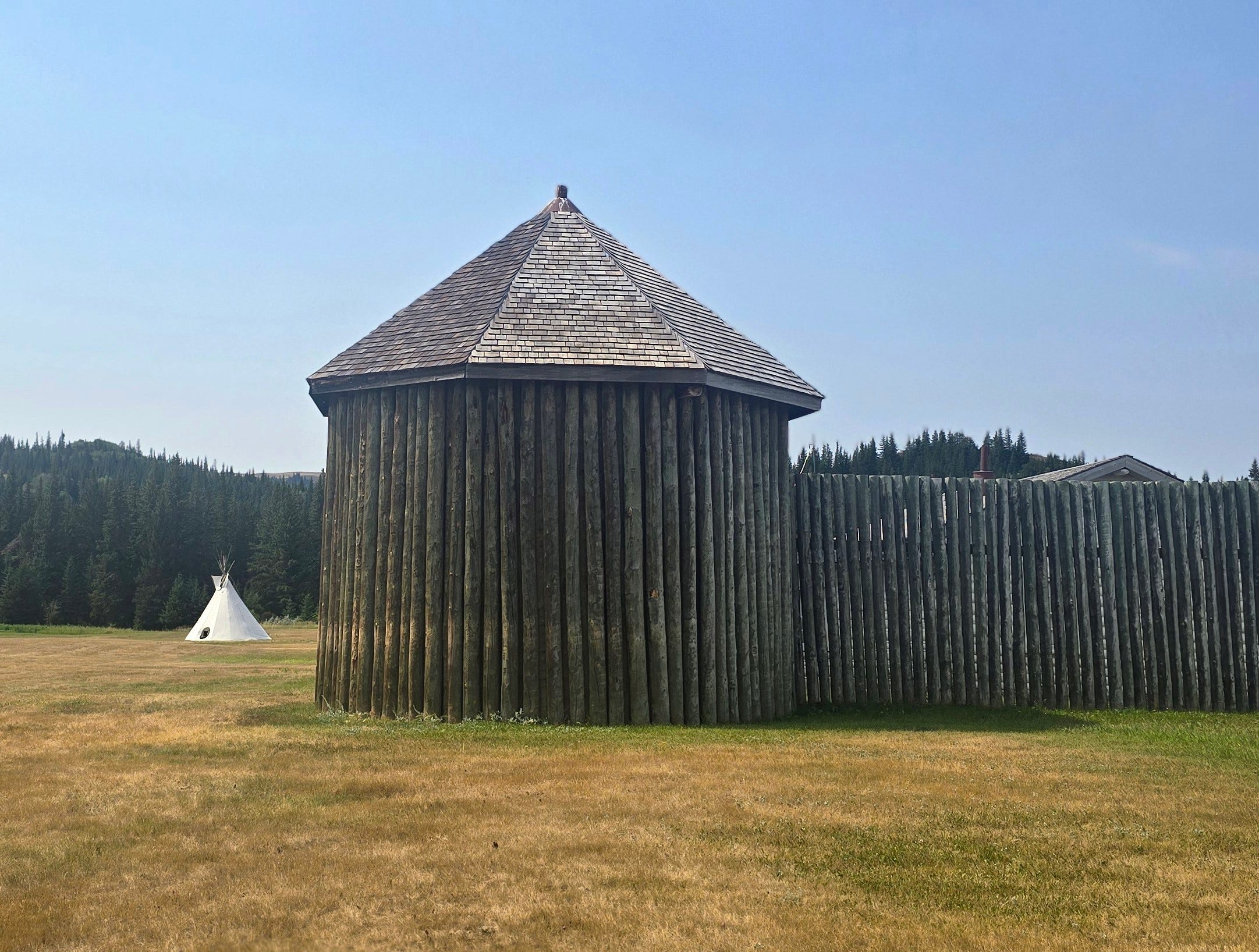
I slowed down this week. I took a few days of vacation in the splendour of the Cypress Hills with my two teenagers, in that elevated island of lodgepole pine rising out of the dry prairie where Saskatchewan meets Alberta. It is one of my favourite places. The Hills reward the unhurried. They also hold one of the most instructive chapters in our relationship with our American cousins and with the aboriginal peoples of this continent. On our last day in the Hills, we visited the Fort Walsh National Historic Site.
The fort is located on the East side of the hills, in Saskatchewan. Why does Fort Walsh exist at all? In plain language: Because Americans were behaving badly on fresh Canadian soil 150 years ago. In the early 1870s, whisky traders ran their trade north from Fort Benton, Montana, into a West with law on paper and none on the ground (not unlike the Canadian Arctic today).
In June 1873, a party of American and Canadian wolf hunters, inflamed by drink and a quarrel over stolen horses, attacked an Assiniboine camp in these hills and killed a score or more of its people. The massacre scandalized Ottawa and hastened the dispatch of the newly formed North-West Mounted Police. Fort Walsh rose in 1875 and served as the force’s headquarters from 1878 to 1882. It is the kind of history we should work harder to remember. From this ground, Superintendent James Walsh managed Sitting Bull and thousands of Lakota who crossed the Medicine Line after Little Bighorn, seeking a peace the American cavalry would not give them.
Nothing in the national iconography is more proudly Canadian than the scarlet tunic. The 1972 recreation of the fort during the reign of Pierre Trudeau was a nationalist act: it is a monument to the historical proposition that Canada would be governed differently.
In the middle of a trade war, as some call it, there might have been some anti-Americanism on display, I thought. But what did I spot sitting there, amid all the interpretive talk of booze-running bandits from Montana? A John Deere Gator, manufactured in Horicon, Wisconsin, parked on the far south grass in the summer sun. Behind the fort on the West side sat a Parks Canada van, a Ford, assembled south of the border.
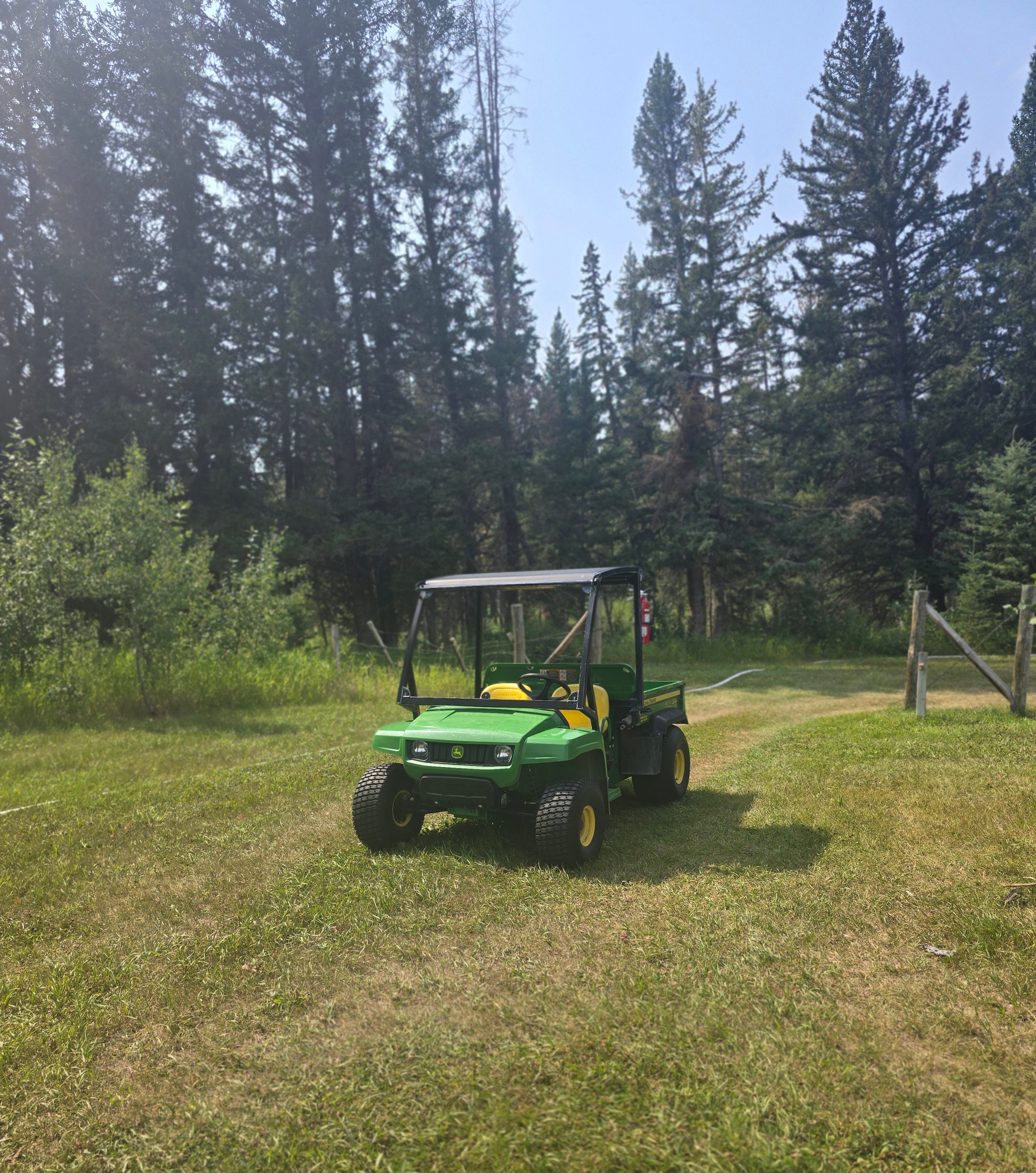
Perfectly good Canadian alternatives exist. Yet the federal agency curating a most Canadian site imaginable buys the iconic American brand. Is this a scandal? A failure of patriotic procurement demanding an inquiry and a directive?
It is nothing of the kind.
Haultain Research is a reader-supported publication. To receive new posts and support our work, consider becoming a free or paid subscriber. You may also support us by sharing our work with like-minded friends and family, or making a modest donation at www.haultain.org
Consider how that Gator likely reached the Cypress Hills. Brandt, a quintessential Prairie company headquartered in Regina, sells and services John Deere equipment across Canada to farmers and builders and has grown into one of the largest Deere dealership networks in the world. Brandt employs thousands of Canadians in good jobs. Through its community program, the company has given millions to children’s hospitals, MS charities, Alzheimer organizations and many other causes that never make a press release. An American brand, a Saskatchewan dealer, Canadian paycheques, Canadian philanthropy.
That is what the real economy looks like.
Canadian and American commerce has been woven together for generations for mutual benefit. The whisky traders were the pathology of that integration; Brandt is its health. What the Mounties established at Fort Walsh was never economic separation from the United States. It was the rule of law within which exchange with the United States could proceed honestly. The distinction matters, and it is precisely the distinction the “elbows up” crowd will not see.
Canada’s prosperity and well-being are tied to the United States by geography, history and the accumulated choices of millions of ordinary people on both sides of the line, regardless of who occupies the White House. No single occupant of Rideau Cottage, equally temporary, can redefine what hundreds of years have shaped.
But he can damage it.
Governments cannot conjure prosperity, yet they retain a formidable capacity to destroy it. Retaliatory procurement rules, buy-Canadian theatrics and the moral licensing of anti-American sentiment do nothing to the White House. They land instead on companies like Brandt, on the dealership mechanic in Swift Current, on the charity counting on next year’s corporate gift.
Chauvinistic nationalism is as destructive today as it was a century ago, when it helped wreck the trading order of the Atlantic world and impoverished everyone it claimed to protect. The “elbows up” nationalists flatter themselves that they stand on guard. In truth, they swing at the fabric of exchange that pays for the things they claim to love about this country.
The Gator at Fort Walsh is a better teacher than the slogan. Wisconsin iron, sold by a Regina company, cutting grass at the headquarters of the Mounted Police, on ground where Canadian law was first raised against American lawlessness. Trade under honest rules built this country.
Resentment dressed up as patriotism will not preserve it.
Excellent insight! All of this phony, ungrateful nationalism is helping to support the neo-mercantilists in Ottawa and Washington. With no understanding of the history of human interaction and progress, the "negotiators" of trade agreements and almost everyone else overlook the essential facts of economic reality. Trade is an exchange of a value for a value between individuals and associations of individuals. The governments of any society produce nothing of value for the purposes of trade. The tariffs they use as weapons are being used against the traders in each sovereign country.
So frustrating! We will support affected businesses says carney. In other words, tax payers will pay more in ever growing debt charges. All to protect our pride. It’s hard not to hate this country