


The complaint heard most often about Monday’s referendum is that it amounts to a protest. Critics mean it as a dismissal. In their telling, a protest seems less serious. It appears as an expression of feeling rather than a proposal.
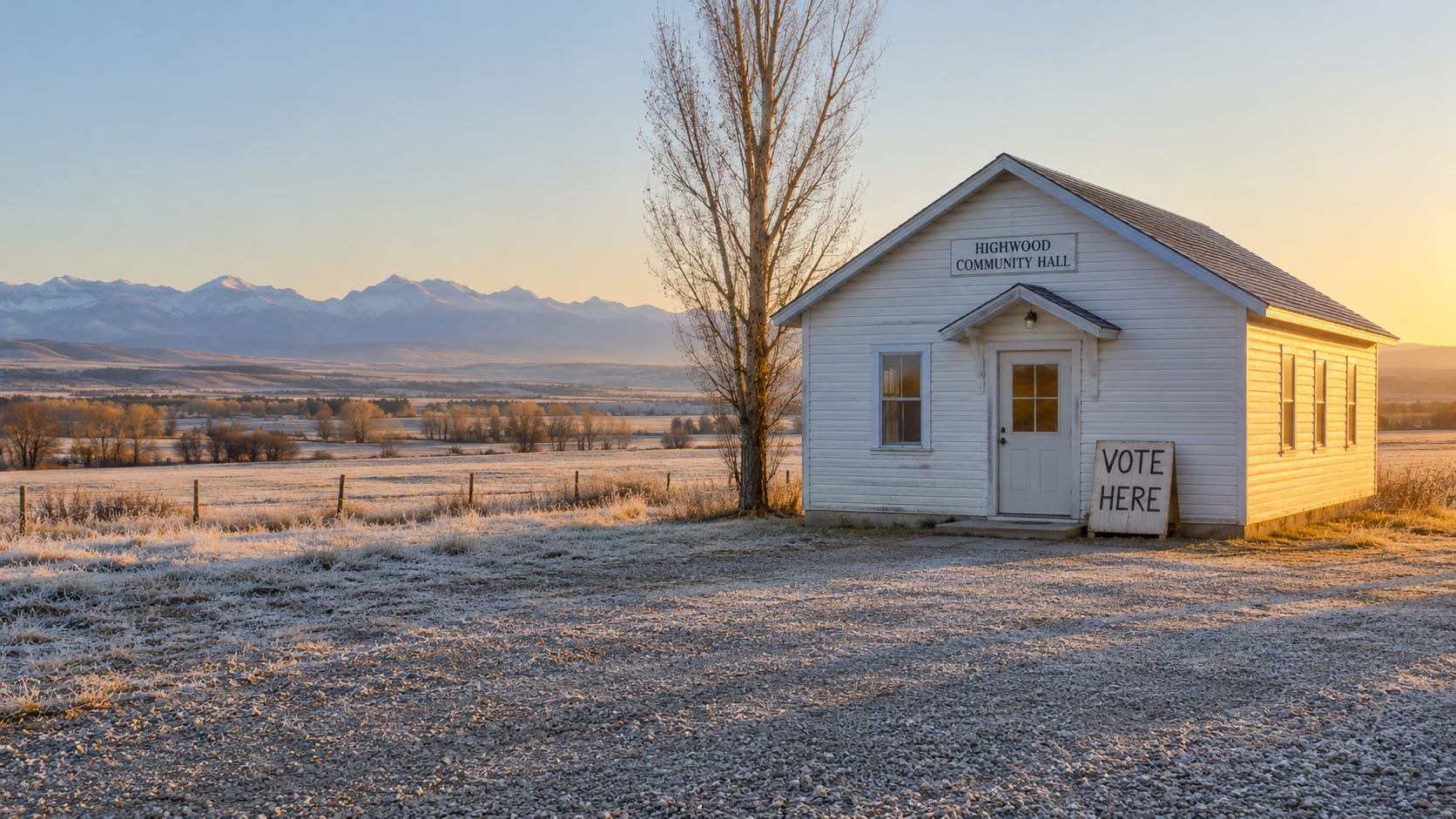
Suppose they are right. I have spent seven weeks writing about it and still cannot find what is wrong with that. People protest when they want something better than what they have. Albertans want a federation that respects the Constitution’s boundaries, and they want assurance that a predatory federal government willing to ignore those boundaries, like the one we had for most of the last decade, cannot resume where it left off or ever return. That desire does not strike me as a tantrum. It strikes me as the ordinary prudence of people whose aspirations and prosperity have been whimsically blocked and who would prefer not to be in the same position again, at the mercy of a distant, unresponsive government.
The advice Albertans have recently received runs in two directions. One is to calm down. The other is to protest more usefully, which turns out to mean electing the person offering the advice, who will then go to Ottawa and pretend to fix things by washing solutions through political compromises that will continue to compromise our future. Both pieces of advice share an assumption: the problem lies in who we send.
That suggests the people giving this advice don’t understand what brought us here.
There are more examples than I can give in this space, but start with the House of Commons. There are presently 343 seats. Ontario holds 122 and Quebec holds 78, which together make 200. A majority government requires 172. A party can form a majority government in this country without winning a single seat outside of Quebec and Ontario.
Alberta holds 37. No number of capable Albertans sent to Ottawa changes that ratio. The ratio is the blueprint.
The Senate repeats the pattern, more starkly. New Brunswick has ten senators and Alberta has six. New Brunswick has about 884,000 people and an economy of $48 billion; Alberta has 5.1 million people and an economy of $474 billion. Because of 1867, a New Brunswicker carries nearly ten times an Albertan’s weight in the upper chamber. The four Atlantic provinces hold thirty seats among them, on barely half Alberta’s population and about a third of its productive output, but all four receive equalization this year, $7.8 billion in total. Alberta receives none and helps pay for the rest. It isn’t that Alberta declines to help New Brunswick and Nova Scotia, which refused for years to develop their own resources. The political issue is that Albertans who give are outvoted 5-to-1 by those who receive in the Atlantic provinces.
The 1867 design dates to when the West was Hudson’s Bay Company territory (one might point out that even the commercial entity The Bay has disappeared). The four western provinces were grouped into a single Senate division in 1915, and given the same twenty-four seats as three Maritime provinces. Newfoundland was later granted six when it joined. The Senate was drawn for a Canada whose West was still owned by a fur-trading company. That Canada no longer exists, as Bruce Pardy and Ted Morton have argued, though they disagree on what should now follow.
One of the five amending formulae in the Constitution seals it. The general procedure, which governs most constitutional change, needs seven provinces holding at least half the population. Ontario and Quebec together hold about sixty per cent of Canadians. Alberta cannot assemble that half without one of them, regardless of the merits of its proposal or how many other provinces agree.
The practical machinery compounds it. An Alberta member of a governing caucus votes as the caucus votes, and the caucus answers to a Prime Minister’s Office that gains authority with each passing decade. Ottawa legislates in provincial fields by attaching conditions to money it raised from provincial taxpayers, renews equalization without provincial consent, and appoints the judges of our superior courts. The country has no standing forum where a province can raise a structural grievance and get an answer, so provinces raise them in courtrooms and referendums instead.
None of this depends on who governs. Each would survive a change of government, of party, or a generation of good intentions. Until these structures change, every reform available to Alberta amounts to tinkering at the edges, and the tinkering could continue for two or three generations without touching anything that produced the grievance.
Haultain Research is a reader-supported publication. To receive new posts and support our work, consider becoming a free or paid subscriber. You may also support us by sharing our work with like-minded friends and family, or making a modest donation at www.haultain.org
In February 1980 the Liberals formed a majority government while winning two seats west of Ontario, and that October Pierre Trudeau introduced the National Energy Program. Since then, a pattern has held in enough campaigns that Albertans no longer treat it as coincidence: western interests serve national politics as something to manage or campaign against, rarely as something to represent. On Thursday, the Prime Minister came to Calgary to repeat a slogan and told Albertans to vote no on all nine questions, a few of which concern their place in the federation. He engaged none of the questions.
The habit is older than 1980. In December 1864, before Confederation was even settled, John A. Macdonald wrote privately to Matthew Crooks Cameron, an Upper Canadian Conservative who opposed the plan because he wanted one government rather than a federation. Macdonald told him not to worry. Within Cameron’s lifetime, he predicted, Ottawa would swallow up the provincial legislatures. The Founder was wrong about the provinces, but the instinct behind the letter did not die with him. A federal government that steps into provincial jurisdiction whenever it believes it knows better is acting on that instinct, whether or not anyone in it has read the letter.
I should say what I got wrong. When this series opened on the province’s birthday, I expected the nine questions to draw an argument. Each put a specific proposal before voters, and specific proposals invite people to take them one at a time. Almost nobody did. The tenth question drew the campaign’s attention, and both sides mostly dismissed the nine as a block: the federalist campaign told Albertans to vote no to all nine, and the Alberta Prosperity Project told its supporters to ignore them. Most treated them as fog. The questions that asked the most were the ones the campaigns never stopped to read.
I did not foresee the turnout either. By Thursday, more than a million ballots had been cast, about a third of everyone eligible to vote, through three days of advance polls that each drew more people than the average advance day in the last provincial election, and close to half a million mail ballots on top. In the 2023 election as a whole, 1.7 million Albertans voted. A third of the electorate turned up early for a vote the commentariat had already called settled. People do not queue in those numbers to register a tantrum. They queue when someone has finally asked them something.
That is worth honouring on both sides. More than eighteen thousand Albertans volunteered for Forever Canadian, knocking on doors, and their love of their country seems as real as anything on the other side of this argument. In Red Deer on Friday the Premier stood beside the Prime Minister and told the crowd they often disagree, quite publicly, and that on the tenth question they agreed (Canada’s saviour, Nenshi, ironically, would never admit he is on the same side as the Premier). Then she handed Carney the government’s literature on the nine. I found that more hopeful than anything said from a podium all month: two people who disagree about nearly everything, sharing a stage, one still trying to make the other read the fine print.
Others deserve thanks for doing what our leaders mostly would not: arguing. Preston Manning, whose Reform Party once told the country that the West wants in, convened an assembly in September to hear every option for Alberta’s future said aloud, staying in Confederation among them. Keith Wilson and Tanya Clemens led the Let Alberta Decide campaign for the second option, and Cory Morgan made the case for independence plainly and under his own name, week after week.
On the other side, the chambers of commerce and the Canada West Foundation commissioned research, published it, and argued for staying without contempt for those who disagreed. Ted Morton put his name to the foundation’s report, the most thoughtful case for staying I read all campaign. It acknowledged that the grievances behind separatism may be real, and Wilson said publicly that it identified many of the same complications his own team had found. That is what civility looks like in a quarrel that matters. They stand for countless others who wrote, organized, argued and knocked on doors, on every side of this question.
What I had hoped for, and did not get, was robust debate. Albertans were often only offered instructions. The leader of the provincial Opposition told them, manipulatively, that five of the questions were broadly anti-immigration and four were blatantly unconstitutional, called the exercise an evil plot, and advised a straight no. The Prime Minister borrowed a campaign slogan for the morning and dropped it by the evening. Nobody in a position of authority took the nine questions one at a time and explained what was wrong with each. A polity is only as healthy as its opposition allows, and this one deserved better than it got.
Opponents largely treated the questions as problems to manage rather than openings for lasting solutions. They want the questions to disappear once the ballots are counted, especially the constitutional ones. They don’t see that without effective, meaningful remedies, the questions will not disappear.
Barry Cooper’s diagnosis, made years ago, keeps coming back to mind: the trouble lies in the regime, the arrangement of institutions and the habits of mind that run them, far more than in any particular officeholder. Pierre Poilievre told a Calgary audience on Friday that Albertans don’t quit. He is right, and the sentiment does him credit. But nearly every leader in the country is now asking Albertans to vote down a rational debate about their future, while some of those same leaders ask them to vote down reforms that might make that future better inside Canada. The message is that the problems are real and the arrangement should stand. Remain, and do what? Not many have tried to answer that question seriously.
Which brings me back to where this series began. On the first of September I wrote about a group of farmers in Okotoks-High River who, in September 1937, filed the paperwork to remove their own member of the legislature. They paid the two-hundred-dollar deposit and set out their grounds: he had failed to keep the promises he made before the election and had lost the electorate’s confidence. Their member was William Aberhart, the premier, and his own government had passed the recall law eighteen months earlier. His government repealed it, retroactively, and Aberhart kept his seat.
Those Albertans were protesting. They used the instrument their government had handed them exactly as the law provided, and the government took it back the moment it was turned against those who made it.
The habit has not died. More than four years ago, people who drove to Ottawa to protest found their bank accounts abusively frozen under an emergency declaration that two federal courts have since found unreasonable. A few were charged with mischief, and that travesty is ongoing. Albertans learned that protest is tolerated only as long as it stays where the people being protested against prefer it to stay. A referendum is about the most orderly, lawful and democratic form of protest a province has. The response has been to tell Albertans that this form, too, is wrong (Some even wanted the referendum to be cancelled, because Trump!).
We are at a point where those who run this country want no change in how it is run, and no change in how people object to it. Aberhart at least had the candour to repeal the law. His successors leave the instrument in place and simply tell people not to use it.
I fear we are about to waste an opportunity. For decades, Canadians were told how their origins were tainted, how they were an insipid, soulless, amorphous racist gang descended from genocidal ancestry. This referendum about a referendum offered a chance to confront the cartoonish imagery the fake Laurentian prime minister developed. A country that pauses to ask what it is for, and how its people wish to live together, rarely gets that chance. Canada is being given one, and most of the people responsible for the last decade are spending the moment telling Albertans to stop asking.
Certainty of certainties: Alberta will still be here on Tuesday, and so will every question on this ballot, and then some. The ballot answers will be counted. The questions will remain open because the attempts to answer them have been insufficient.
You always have such a rational approach. Thank you!