

Contrary to naysayer opinion, when it comes to trading in markets beyond its boundaries, Alberta would have better options as an independent state than under the status quo, which currently blocks some of its resources.
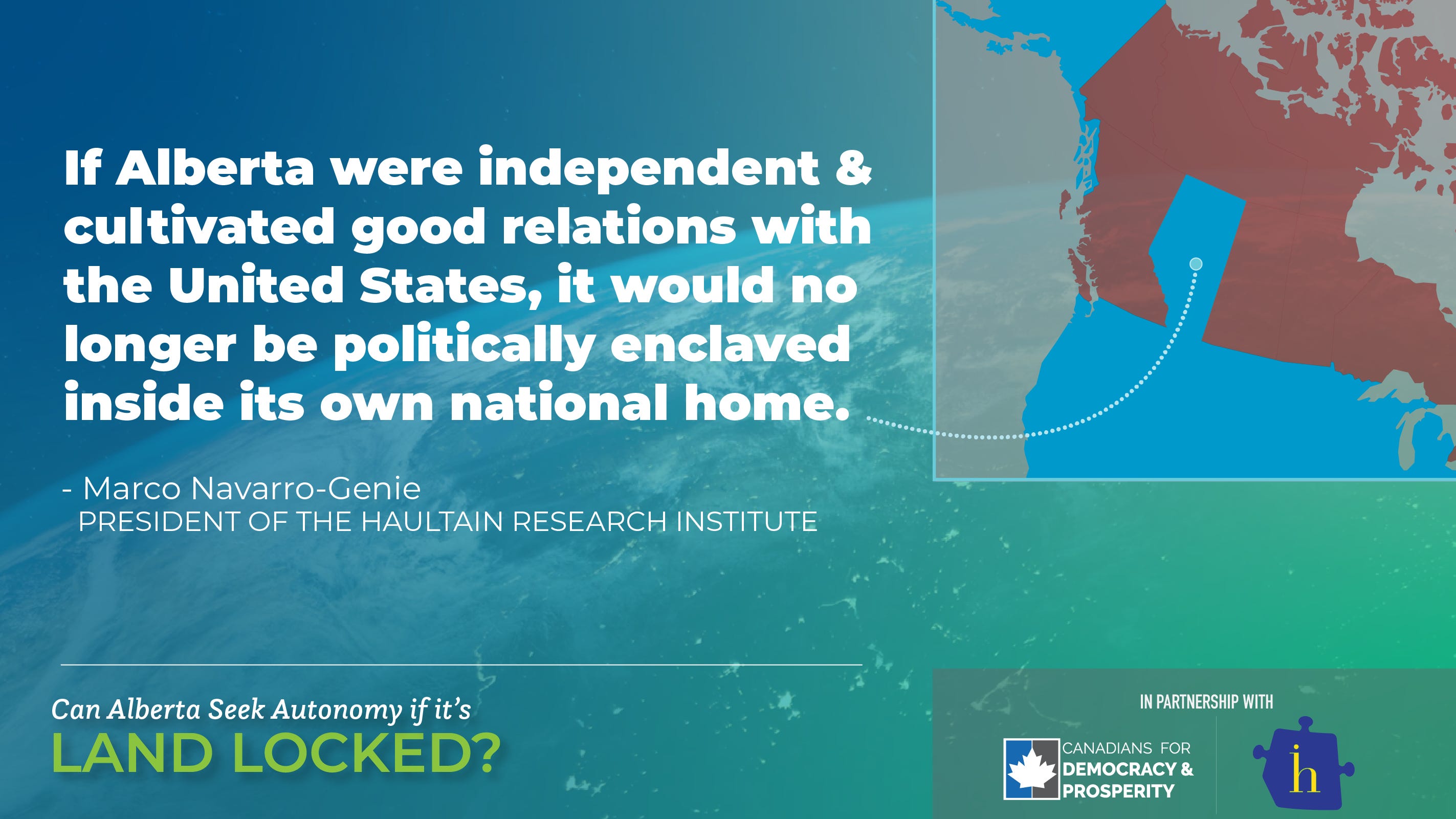
Alberta is landlocked, and landlocked countries depend on their neighbours for access to trading seaports. It is the reason some people quip, including the then premier of Alberta Jason Kenney, that an independent Alberta would remain landlocked. But the core problem is uncooperative provincial cousins, not the fact of being landlocked.
Pipelines, highways, air corridors, waterways, and canals are among the human solutions to address landlocked territories. Alberta has some of these. They are created to move people, goods and services. But two uncooperative Canadian provinces have been committing constitutional mutiny: Quebec and British Columbia (Manitoba under Wab Kinew is signalling a desire to join in the abuse, depending on the day of the week). They have been preventing Alberta from further developing solutions to its landlocked status. In that sense, it is worth repeating that being landlocked isn’t the problem.
Access, not geography, is the central issue. The access problem is made worse by the ineptitude of Canada’s central government and its desire to cripple Alberta’s hydrocarbon industry.
Twenty percent of the world’s states are landlocked, and only three among them are enclaved, meaning entirely surrounded by only one country (Lesotho, San Marino and Vatican City). Ottawa has effectively enclaved Alberta by vacating its national leadership role, granting radical environmentalists and rogue provinces veto power over major infrastructure construction across internal borders. Plus Alberta also requires Ottawa’s consent to deal with our neighbour across the international southern boundary. Alberta is thus being enclaved by policy and politics.
Alberta is naturally landlocked, indeed, but it’s the neighbourhood’s attitude that is terrible. Trapping and preventing a neighbour’s products from reaching markets is a nasty thing to do but doing it to a sister territory inside the same country hits a much higher plane of abuse. Alberta must therefore urgently find ways to free itself from the enclaving subjection of its abusive Laurentian and Pacific cousins.
How does Alberta do that?
Let’s deal first with one common false assumption. Having coastlines alone doesn’t make countries (or provinces) wealthy. Honduras and Nicaragua – among the poorest in the hemisphere – have enviable access to Atlantic and Pacific coasts. If coastline alone were the determinant of economic wealth, Nicaragua (with more coastline relative to its size) would be richer than Brazil, and Nova Scotia would be more prosperous than Saskatchewan.
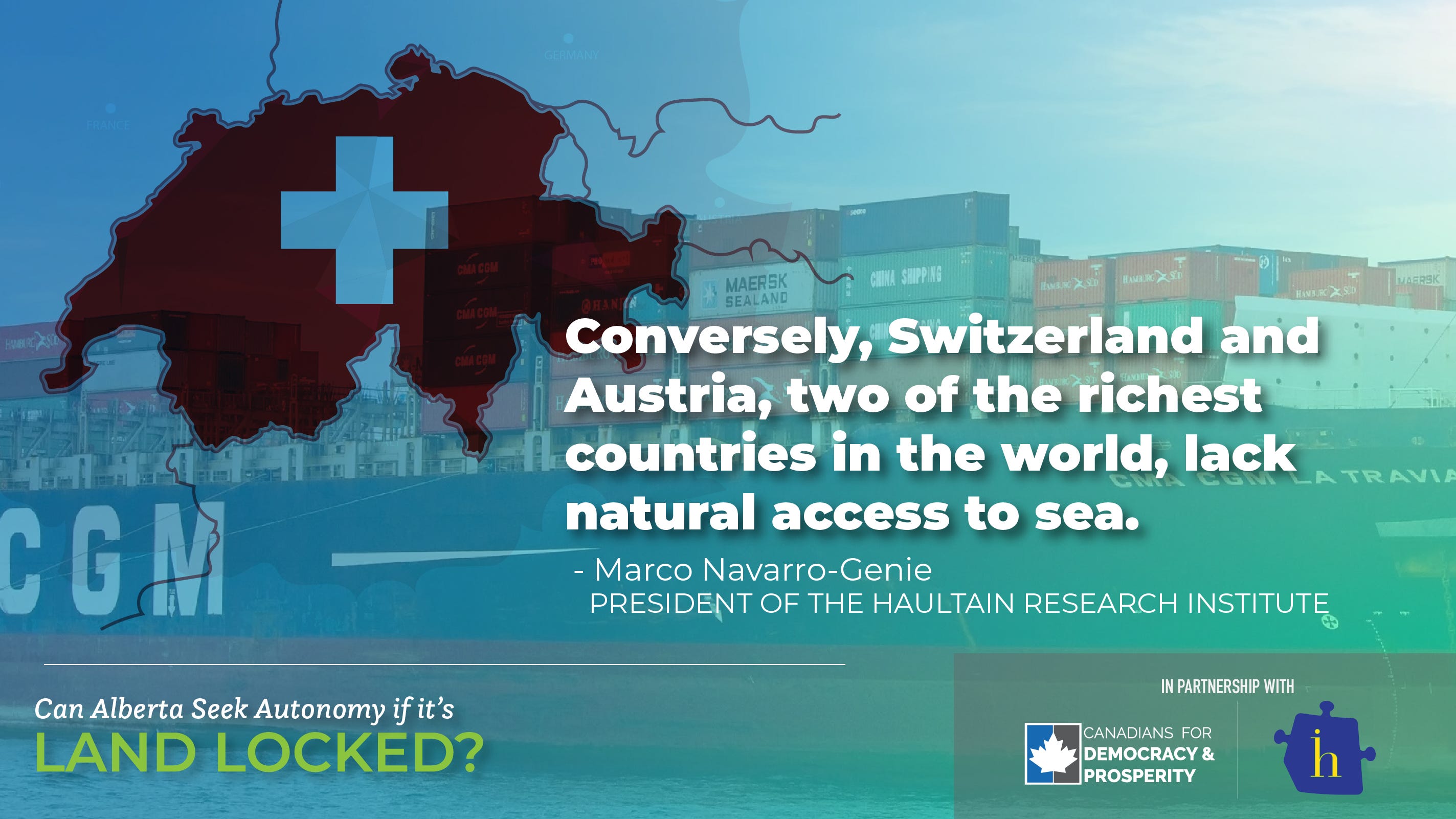
Conversely, Switzerland and Austria, two of the wealthiest countries in the world, lack natural access to sea.
While most countries with no coastlines are poor (50% of them are in Africa), the difference of Switzerland and Austria, when compared to other landlocked states such as Lesotho or Bolivia is access to markets. Put differently, Switzerland and Austria are richer because their decent neighbours do not blockade their infrastructure and access to markets (Remember how Newfoundland and Labrador was once blocked from building electricity distribution lines through Quebec? Newfoundland and Labrador has plenty of cost line).
A second realization to confront is that Alberta (independent or not) can’t transform its blockading cousins into decent folks.
But if Alberta were independent and cultivated good relations with the United States, it would no longer be politically enclaved inside its own national home. Alberta could, on its own, work with the states of Montana and Washington to develop a trade corridor for exporting and importing goods through Seattle.
Underlining the importance of the neighborhood, consider the example of landlocked Kazakhstan, which became independent in 1991 after breaking away from the most murderous regime in the history of peoplekind, the Soviet Union.
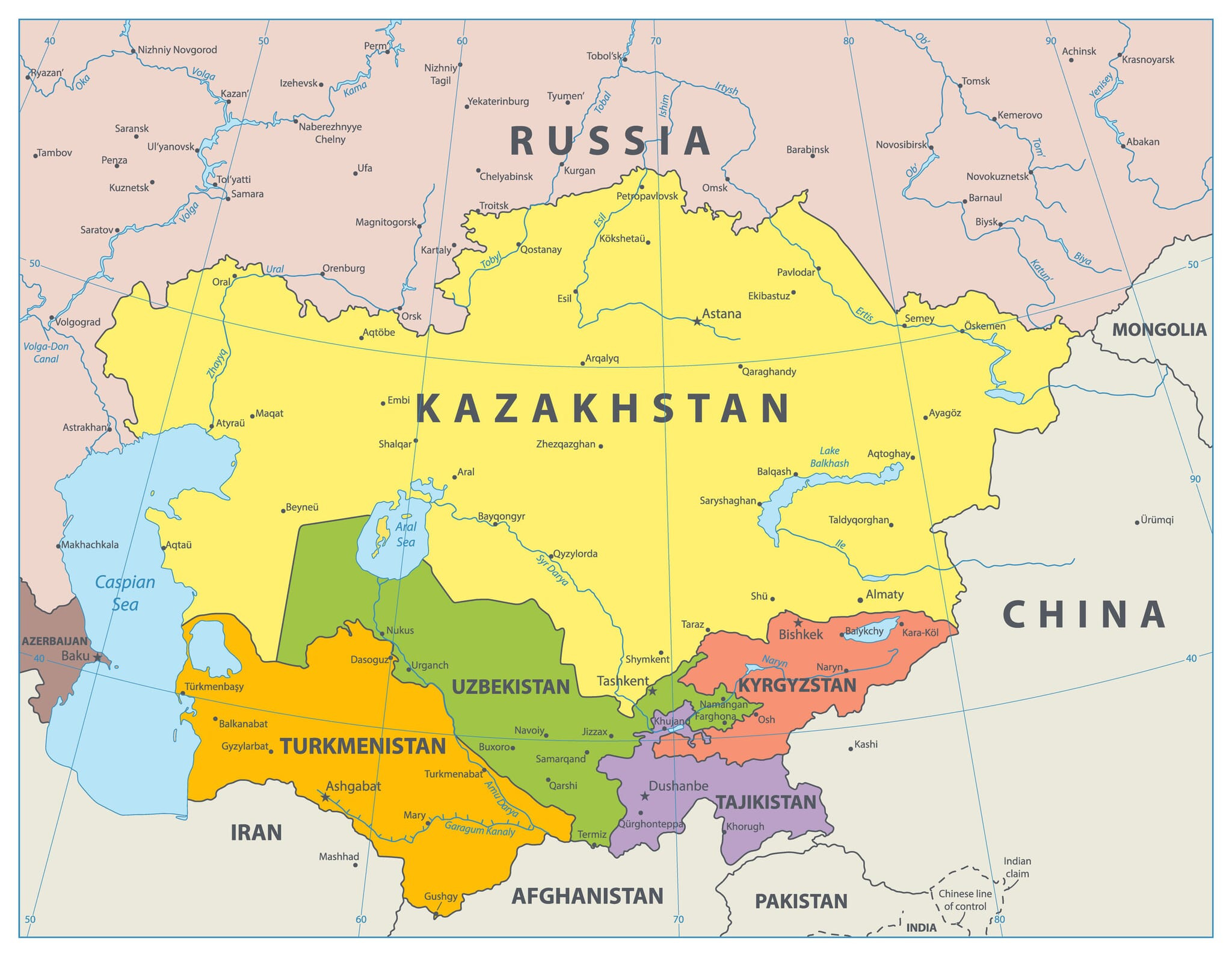
Given its geography, Kazakhstan is security-challenged. It inhabits one of the most treacherous neighbourhoods on this planet. From the outset, Russia resisted Kazakhstani oil exports to other countries and attempted to control the outflow of its oil. Sound familiar?
But within two decades, despite a potentially ignitable Muslim majority, neighbours like China and Russia, with Chechens nearby, and with Afghanistan, Pakistan and Iran not very far south, Kazakhstan has managed to develop capacity, building upgraded pipelines and exporting oil to the four cardinal points. They export hydrocarbons to Russia in the North, to China in the East, to Europe with lines as far as Gdansk on the Baltic Sea, and South through the Persian Gulf.
They have developed an exporting network through challenging societies and some of the most hostile territories in the world. Kazakhstan has even managed to negotiate with Iran to sell oil out of the Persian Gulf, thousands of miles away across more than one international border. But Alberta cannot bring its oil across Quebec to sell on New Brunswick shores, inside the very same country!
While it is true that independence is not the only option for Alberta to solve its induced enclaved condition, the crucial lesson here is challenging to miss. Alberta’s problem is the neighbourhood. Regressive and oppressive Iranian Shiite mullahs have proven to be more reasonable business counterparts than former World Wildlife Fund apparatchiks and NetZero Bankers in Ottawa, populist nationalists in Quebec City, and the rigid eco-zealous alliance of Greens and New Democrats in Victoria. This is Alberta’s problem!
Kazakhstan didn’t wait for its economic welfare and future to be determined by questionable people outside its borders. Neither should Alberta.
If you like what you read, help us spread the word: share this post with like-minded citizens, consider a paid subscription, and donate to the Haultain Research Institute.
Switzerland and Austria aren’t petro-states. Getting free of left-wing net-zero Canada would certainly help, but the US whipsaws between hydrocarbon-friendly regimes like the current one, and the same net-zero cancel all the pipelines stuff we have in Canada. Building refineries in Alberta would probably be the best possible long-term plan.
Yep