


How does a ballot question that names no race, no nation and no faith become racist?
Progressive partisans spent the summer and autumn telling Albertans that it does. On October 19, more than a million Albertans voted Yes on five questions about immigration regardless, and a familiar chorus answered that the province had disgraced itself. Their verdict arrived before the reasoning. Examined, their reasoning collapses.
Racism is a serious charge, but their charge does not survive casual acquaintance with the evidence. This one fails three tests: the questions’ text, the voting pattern, and the rest of Canada's opinion. Each test can be checked against a public record. None requires the claims about reading anyone’s heart.
The Charge
Naheed Nenshi, leader of the Alberta NDP, called the questions racist and described the package as an evil plot, a scheme to blame newcomers for Alberta’s supposed social troubles and to prepare the ground for later separatist votes. Rachel Notley, his predecessor, called the immigration questions discriminatory. Months earlier, in February, she had gone further, posting her own adaptation of the lines Martin Niemöller wrote about his silence as the Nazis came for one group after another. In her version, immigrants took the place of Hitler’s victims, and Danielle Smith’s government took the place of their persecutors. Thomas Lukaszuk, the former Progressive Conservative deputy premier who led the Forever Canadian petition, spoke more plainly. “For Hitler it was the Jews,” he wrote of Smith’s immigration proposals. Smith called the comparisons disgusting.
Readers should pause on the comparison because its authors are experienced politicians who know what it means. Niemöller’s lines describe a regime that came for communists, trade unionists and Jews, and murdered millions. Question 3 asks whether a temporary resident should live in Alberta for a year before collecting provincial social supports. Notley and Lukaszuk placed those two things in the same frame.
Reaching for the facile Nazi comparison is a good sign the user doesn’t know much history and has no strength of argument.
The academics chose their words more carefully, and only slightly less disgracefully. Duane Bratt of Mount Royal University wrote that the immigration questions appeal to a racist fringe, and that within Alberta separatism “there is a clear racist element.” I answered him on 9 September. Bratt has since called the five “anti-immigration referendum questions,” and when CTV asked him whom the opposition to immigration targets, he said it was neither Ukrainians nor the British: in his telling, the targets were people not of European descent. Jared Wesley of the University of Alberta told Global News that the referendum debate was feeding a climate of rising racism, and reported hearing the white replacement theory discussed at separatist town halls.
Wesley never said “these questions are racist.” He had no need to. Placing a ballot question alongside replacement theory and the claim that its targets are non-Europeans makes the charge while keeping the deniability.
Further left, the columnist David Climenhaga dispensed with insinuation. Writing in rabble.ca, he said the questions were meant to appeal to voters who admire the Trump administration’s approach to immigration, which he called racist and cruel. Of one proposal he wrote: “In practice, it will inevitably be racist and unfair. It is hard to believe it is not intended to be.” Of another, he explained that “the goal is essentially racist and intended to weed out non-Christians and those of non-European heritage.” Religion thus joined race in the indictment, as it often does when progressives speak of racism, although a faith is neither a race nor an ancestry. The referenda questions mentioned neither.
What the Questions Say
Read them as printed. Question 1 asks whether Alberta should take greater control of immigration to bring it to sustainable levels, prioritize economic migration, and give Albertans priority for new jobs. Question 2 asks whether provincially funded programs, such as health care, education, and social services, should be limited to citizens, permanent residents, and people holding an Alberta-approved immigration status. Question 3 asks whether people with non-permanent status should live in Alberta for twelve months before qualifying for provincial social supports, while citizens and permanent residents continue to qualify as they do now. Question 4 asks whether such residents should pay a reasonable fee or premium toward their families’ use of health care and education. Question 5 asks whether voters should prove their citizenship, with a passport, birth certificate or citizenship card, before casting a ballot in a provincial election.
Not one of the five names a country, a continent, a language, an ethnicity, a colour or a creed. Each criterion is legal: citizenship, permanent residence, temporary status, and length of residence. A Ukrainian on an emergency visa, an American on a work permit, and a Filipino student would stand in the same place under Question 3. A Somali-born Canadian citizen in Calgary would stand exactly where a fifth-generation rancher stands under Question 5, with the same passport in hand.
Race and legal status belong to different orders of things. A person is born into a race; a person enters a legal status through a relationship with a state, on terms the state sets and the person accepts. Every country distinguishes among citizens, permanent residents and visitors. Canada does so in its own Charter of Rights and Freedoms. Section 6 reserves the right to enter and remain in Canada for citizens and limits the right to move to and work in any province to citizens and permanent residents. Even that right is subject, under section 6(3)(b), to “reasonable residency requirements as a qualification for the receipt of publicly provided social services.” The Charter thus permits a waiting period for social services that applies to citizens moving between provinces. Question 3 proposes a waiting period only for temporary residents, who have no mobility right under section 6, and leaves citizens and permanent residents exactly where they are. Professor Nenshi knows these things.
Canadian provinces already draw these lines without scandal. Ontario removed international students from the Ontario Health Insurance Plan (OHIP) in the early 1990s, under Bob Rae’s New Democrats; they now pay for compulsory coverage through the University Health Insurance Plan, at $948 a year for most students. Nobody calls Queen’s Park racist for it. Quebec has selected its own economic immigrants under the Canada-Quebec Accord since 1991. Since Confederation, Section 95 of the Constitution Act, 1867, has made immigration a shared jurisdiction, with federal paramountcy. Alberta asked for a version of what the Constitution already allows and Quebec already holds. I made that case in detail before the vote.
Some of the questions were sounder than others. The rules for temporary residents left open questions about existing obligations, enforcement and cost. Those are fair objections, and they belong to the ordinary policy debate. A policy can be badly designed without being racist, and the remedy for bad design is a better argument about it.
Motive is a separate matter, and both sides argued over it at length. Some suspected the UCP of half-hearted conviction, adding the immigration questions only to appear to act. Others called them a decoy, meant to dilute the separation question at the bottom of the ballot. Either suspicion may be correct. Neither changes what Albertans were asked, and a voter answers the question printed on the ballot rather than the one a columnist imagines behind it.
The Treaty Detour
Opponents also argued that holding the referendum at all violated treaty rights. Chiefs of Treaties 6, 7 and 8 made that argument with force, and directed it at the separation question and the petition process that placed it on the ballot. Nenshi extended it to the constitutional questions, pushing the Laurentian trope that Albertans are racist. Whatever its merits, the treaty objection never touched Questions 1 to 5. A residency rule for temporary residents, a premium on their families’ health care and a citizenship check at the polls have nothing to do with the treaties, and First Nations people, as citizens, would stand under each of those rules exactly where every other citizen stands. I argued that the Constitution is the treaty Ottawa keeps breaking. The point here is narrower. Opponents aimed the treaty argument and the racism argument at different questions on the same ballot, and running the two together added gaseous volume without adding evidence.
What Ottawa Built
Albertans did not invent the policy problem they voted on. Ottawa built it quickly, without consulting the provinces that would carry it.
Between 2022 and 2024, the federal government admitted temporary residents at a pace without precedent in Canadian history. In 2023 alone, Canada’s population grew by 3.2 per cent, the fastest rate since 1957, as 471,771 permanent immigrants arrived and the temporary population rose by 804,901. Alberta grew faster than any province that year, by 4.3 per cent. By Statistics Canada’s revised count, the non-permanent population peaked at nearly three million on October 1, 2024, about 7.2 per cent of everyone living in the country. In March 2024, Ottawa set itself a target of bringing that share down to 5 per cent within three years, an acknowledgement that the number had outrun the country’s capacity.
Ottawa thus conceded the premise of Question 1, that immigration levels must answer to the capacity of the country receiving them, two and a half years before Albertans were accused of racism for voting on it. Federal ministers conceded the pressure on housing, health care and affordability, and Justin Trudeau admitted, late in 2024, miracle of miracles, that his government had not got the balance right. By July 2026 the temporary population still stood at 2.78 million, or 6.7 per cent of the total, well above the government’s own target.
Provinces bear most of the weight of such decisions. Provinces are responsible for hospitals, classrooms, social assistance, and transit, and provinces and their municipalities own the land and issue housing permits. Ottawa sets the numbers; provinces and cities absorb the people. No federal plan existed to build the schools, clinics, and homes that the surge would require. The provincial government bears its share of the blame, since provinces approve the hospitals and classrooms, and Alberta’s own campaign to recruit workers from other provinces added to the demand. But provinces cannot plan for arrivals whose numbers are set elsewhere and revised without notice. During the same years, Ottawa made large projects harder to build. The Impact Assessment Act, known to Albertans as the no-more-pipelines law, hung over major projects for four years until the Supreme Court of Canada found most of it unconstitutional in October 2023. A government that leaves borders unguarded and lets hundreds of thousands of people in is not responsible.
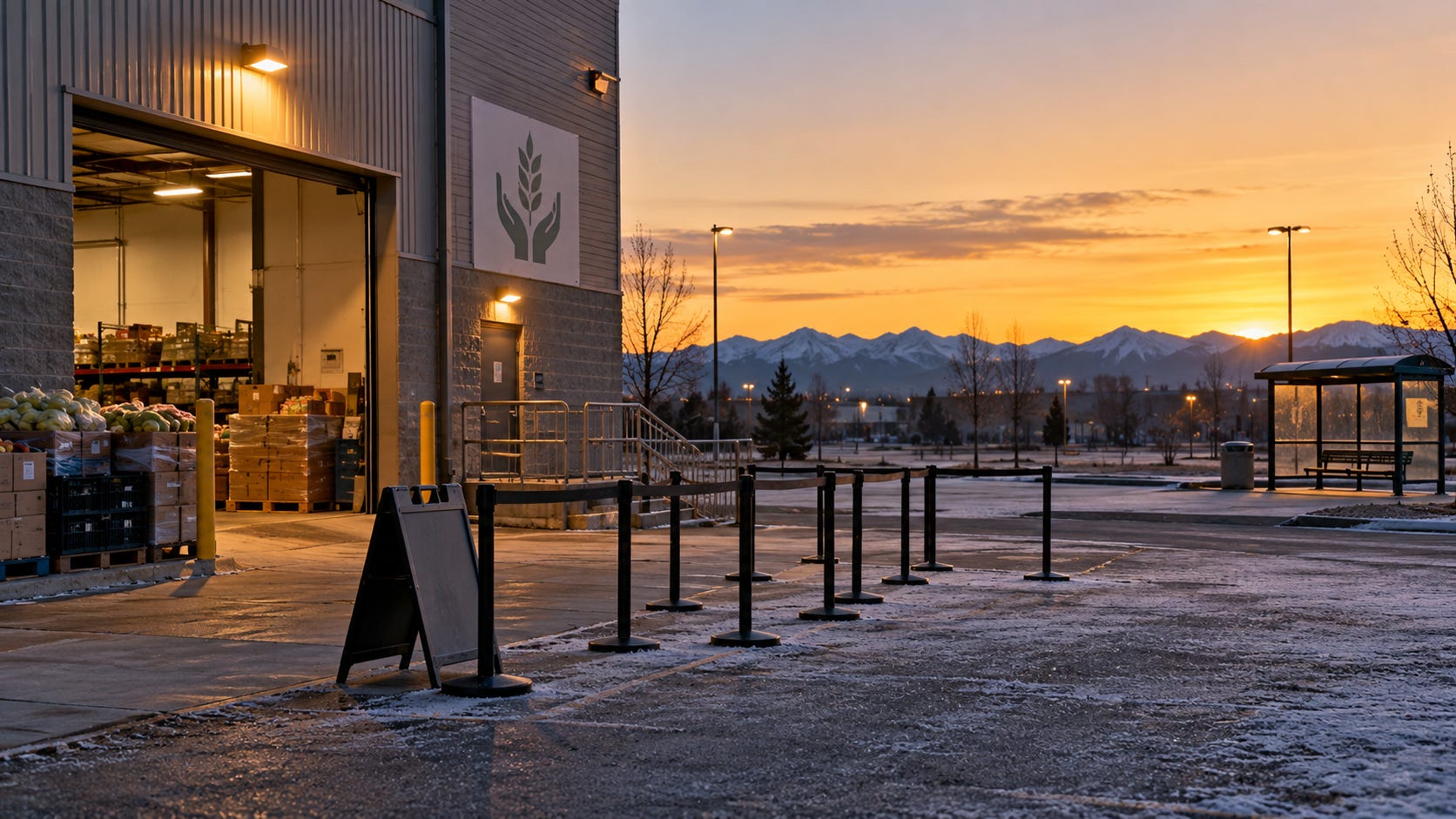
That irresponsibility costs the newcomers most. Food Banks Canada’s HungerCount found that in March 2025, people who had arrived in Canada within the previous ten years made up 34 per cent of food bank clients, double their share of 17 per cent in 2022. The 2026 count, released on October 21, recorded 230,196 food bank visits a month in Alberta, up 9.3 per cent in a year. Many came on the strength of promises: a study permit as the road to permanent residence, a job offer as the road to a future, a recruiter’s fee as the price of entry. Families spent their savings, and some borrowed against land and relatives at home, to reach a country that advertised itself as open, prosperous and short of workers. They found scarce and costly housing, millions of Canadians already without a family doctor, permits that expired before careers began, and a system that had sold more futures than it could honour.
Newcomers who could leave have begun to do so; the temporary population has fallen by about 200,000 from its peak. Those who spent everything to come cannot easily go back.
A policy that leaves its intended beneficiaries in food bank queues is the failure in this story. A province asking for a say in the numbers arriving at its hospitals and schools is a response to that failure. Somewhere along the way, the response acquired the name that the failure had earned.
This federal behaviour was not compassion for the newcomers nor for the constituents.
Haultain Research is a reader-supported publication. To receive new posts and support our work, consider becoming a free or paid subscriber. You may also support us by sharing our work with like-minded friends and family, or making a modest donation at www.haultain.org
Quebec Said It First
Paul St-Pierre Plamondon, sworn in as Quebec premier on October 21, came to the University of Calgary in September 2025 to speak about federal-provincial relations. His office announced the visit as a lecture on the federal government’s abuses of power under Canada’s Constitution, and proposed a conversation with Albertans about Ottawa’s repeated encroachment on provincial jurisdiction, to the detriment of both provinces' democratic choices. In Calgary, he used the same language, describing a federal government that undermines provincial jurisdiction rather than respecting it. During Quebec’s election campaign this September, he called any federal decision to raise immigration into Quebec an anti-democratic abuse of power. He had earlier warned that, if Ottawa stayed its course, Quebec’s 560,000 temporary residents would have no viable future.
Announcing the visit, he wrote that Quebec and Alberta shared several observations about the state of the federation, and recalled that Albertans, in Peter Lougheed’s time, had also fought to keep certain rights.
Quebec’s power to select its own economic immigrants is older than many of the people now denouncing Alberta’s request, and no federal leader proposes to withdraw it on grounds of racism. Federalists accept it as a settled feature of Confederation.
Other premiers have described the same disorder in their own accents. François Legault blamed the rise in temporary residents for Quebec’s housing shortage and warned that sustained levels risked an overreaction against newcomers. David Eby said the temporary foreign worker program should end or be reformed. At their July 2025 meeting, the premiers announced their intention to take more control over immigration, and Doug Ford said Ontario would issue its own work permits rather than wait for Ottawa, a pledge he withdrew within the week. Premiers of every stripe, from Quebec nationalists to British Columbia New Democrats, have reported budgets blown open, services stretched and newcomers stranded. Alberta differed only in putting the question to its voters.
The constitutional questions, 6 to 9, followed the same logic, but went deeper. If Ottawa can extend its reach into provincial jurisdiction whenever it chooses, a province needs protections that outlast any single negotiation. Quebec has pursued such protections for six decades. Albertans, it turned out, were not ready to amend the Constitution: all four constitutional questions failed.
The Arithmetic of the Accusation
The results remain unofficial until Elections Alberta publishes the official count on 29 October. Question 1 passed with 54.8 per cent, 1,118,084 votes to 921,002. Questions 2 to 4 passed more narrowly. Question 5, proof of citizenship to vote, drew the strongest support of the five, at 58.0 per cent. Questions 6 to 9 failed, the Senate question by fewer than two points. On Question 10, 74.9 per cent chose to remain in Canada.
Nenshi read the same results as a failure. If Smith wanted a mandate, he told reporters, “she should have been able to get 85% on questions like this, and she was unable to carry the day.” A threshold of 85 per cent turns any attainable result into a defeat. By that measure, even the 74 per cent of Canadians outside Alberta who want the same power for their own provinces, as Ipsos found, would have failed.
Voters who say Yes to provincial control of immigration, No to abolishing the Senate, and Remain to Canada on a single ballot weigh each question on its own terms. The government advocated Yes on all nine questions; Albertans granted five and refused four. A province of dupes does not vote that way. Alberta’s government does not dictate what Albertans think, any more than it can dictate what Ontarians think.
The ridings tell the same story. If the questions were an attack on immigrants, the ridings where immigrants are most numerous should have rejected them by landslides. They did not. In Calgary-North East, where half the residents are immigrants, Question 1 lost narrowly, with 46.9 per cent Yes, while Question 5 passed with 50.4 per cent. In Calgary-Cross, where immigrants make up 45.6 per cent of residents, Question 1 split almost exactly even and Question 5 passed with 52.8 per cent. The heaviest No votes came from elsewhere.
In Edmonton-Strathcona, a university riding where immigrants make up about a fifth of residents, 71.7 per cent rejected Question 1 and 69.5 per cent rejected Question 5. That’s Edmonton. Opposition to the questions followed political allegiance far more closely than it followed the share of immigrants in a riding. A ballot records a political preference. It does not disclose the moral character of the person who marked it. Nenshi may say the immigrant voters of northeast Calgary were misled. He would then need to explain why the progressive voters of Strathcona were not.
Then there is the rest of Canada. In September, Ipsos asked Canadians outside Alberta about propositions close to the ballot’s. Seventy-four per cent supported giving their own province more control over immigration. Sixty-seven per cent supported denying access to federal programs to people without legal status. Albertans, polled at the same time, came in lower, at 65 per cent and 59 per cent. The second comparison is loose: Ipsos asked about people without legal status and federal programs, while the ballot asked about legal temporary residents and provincial ones. The first comparison is exact, and it matters.
Let us follow Nenshi’s reasoning to its end. If 55 per cent of Albertans voting for provincial control of immigration marks Alberta as a racist province, then 74 per cent of Canadians elsewhere wanting the same power for their own provinces marks the rest of Canada as more racist than Alberta: by nearly twenty points against the vote, and by nine points against Albertans polled at the same time. Ontario, Quebec, British Columbia and the Atlantic provinces stand indicted alongside Calgary-North East. Either the charge is true of most Canadians, or it was never true of Albertans.
Naheeed Nenshi may clownishly claim to have saved the country (Most adults know to beware of people who claim to be your saviours). But on his blanket pronouncement that the first five questions in Alberta’s democratic exercise were racist, the independent opinion and vote of Canadians of all stripes turned him into an embarrassment.
Racism exists, in Alberta as everywhere, and the campaign surfaced some of it. That is why the word should carry a duty of proof. A proposal to exclude people from public services because of their ancestry is one kind of argument; a proposal to make temporary residents wait a year for provincial supports is another. Using one word for both cheapens it for the cases that deserve it.
The five questions asked who decides how many people come, who pays for the services they use and who may choose a government. Those are questions of citizenship, and citizens in every province are asking them. Calling the asking racist will not repair what Ottawa broke. It tells the newcomer in the food bank queue that the people who noticed his plight were the problem.
The questions named no race, no nation and no faith. Only their accusers brought race to the ballot.